Renaissance four-doored cabinet (19th c. & some 16th c. elements)
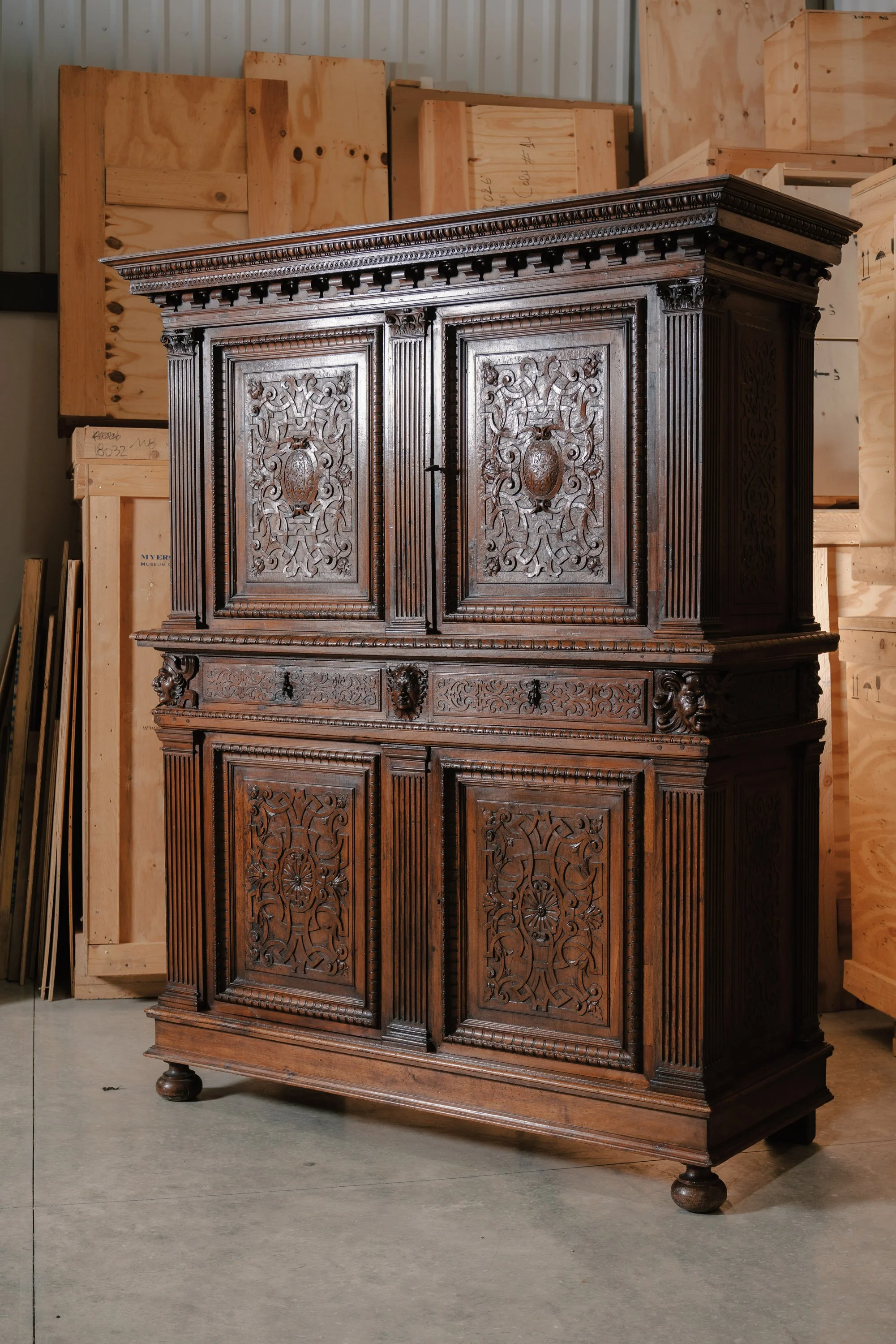
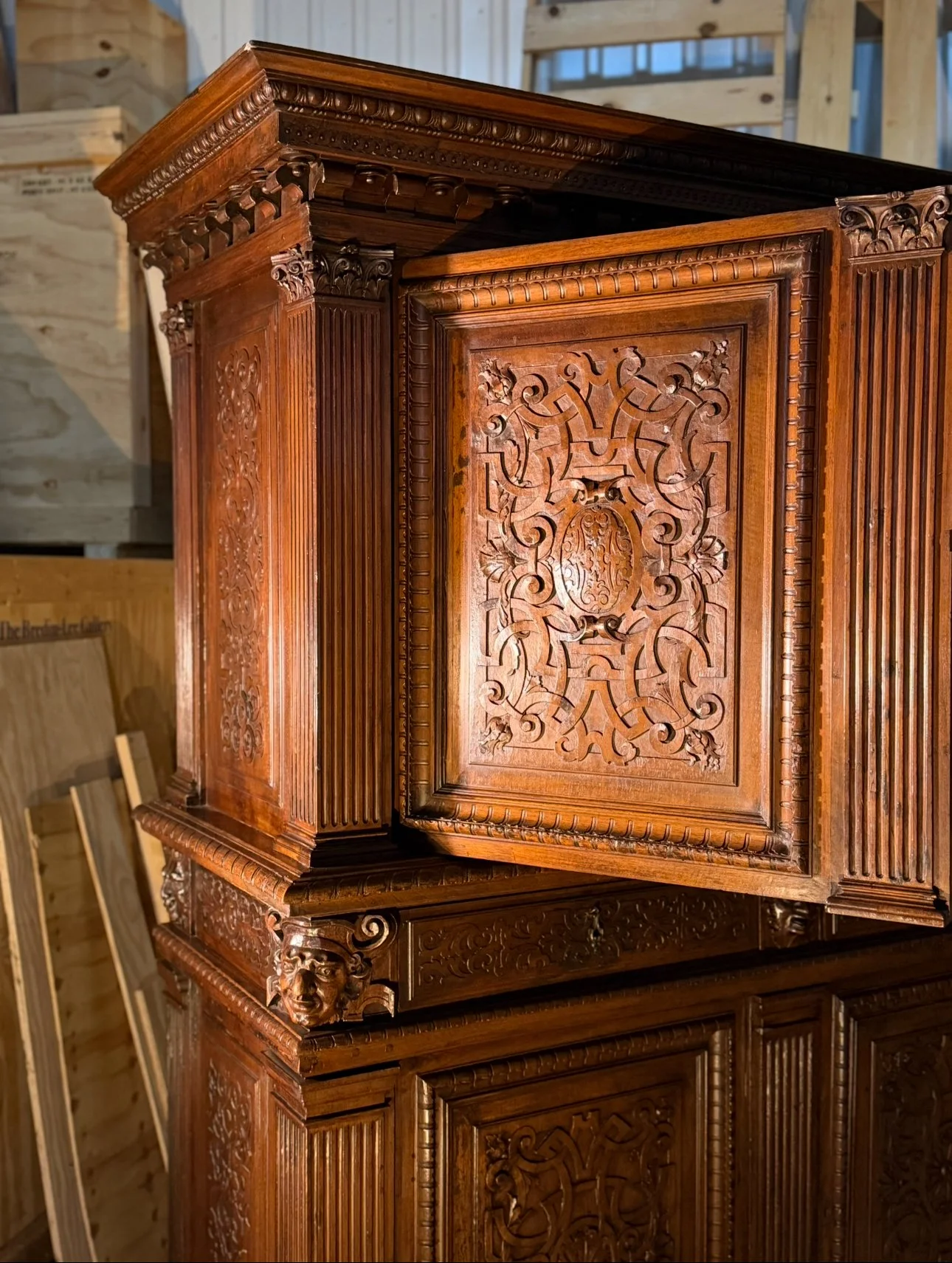
A four-doored armoire, sometimes referred to as a two-tiered buffet, in walnut and stylistically in the manner of the Lyonnaise school circa 1550. If this piece were entirely from the original period, it would be an absolute benchmark example of renaissance work. This architectural style, devoid of profuse figurative sculpture often associated with French renaissance work, is from what we’d call the first French renaissance (which was more closely tethered to Italy).
The quality of the object, especially from afar, leaves one wondering whether it isn’t authentically from the 16th century. This is an effect which seems to have been carefully sought by the makers and it does blur the line between an artful reproduction and a work which is intended to fool the appraiser. Upon inspection, though, many obviously unconcealed post-industrial aspects within the piece, suggest the cabinet was not conceived as a counterfeit, as amusing as that might be today (this 16th century style was coveted already by the mid 1800s and forgeries were indeed produced to dupe collectors of the time).
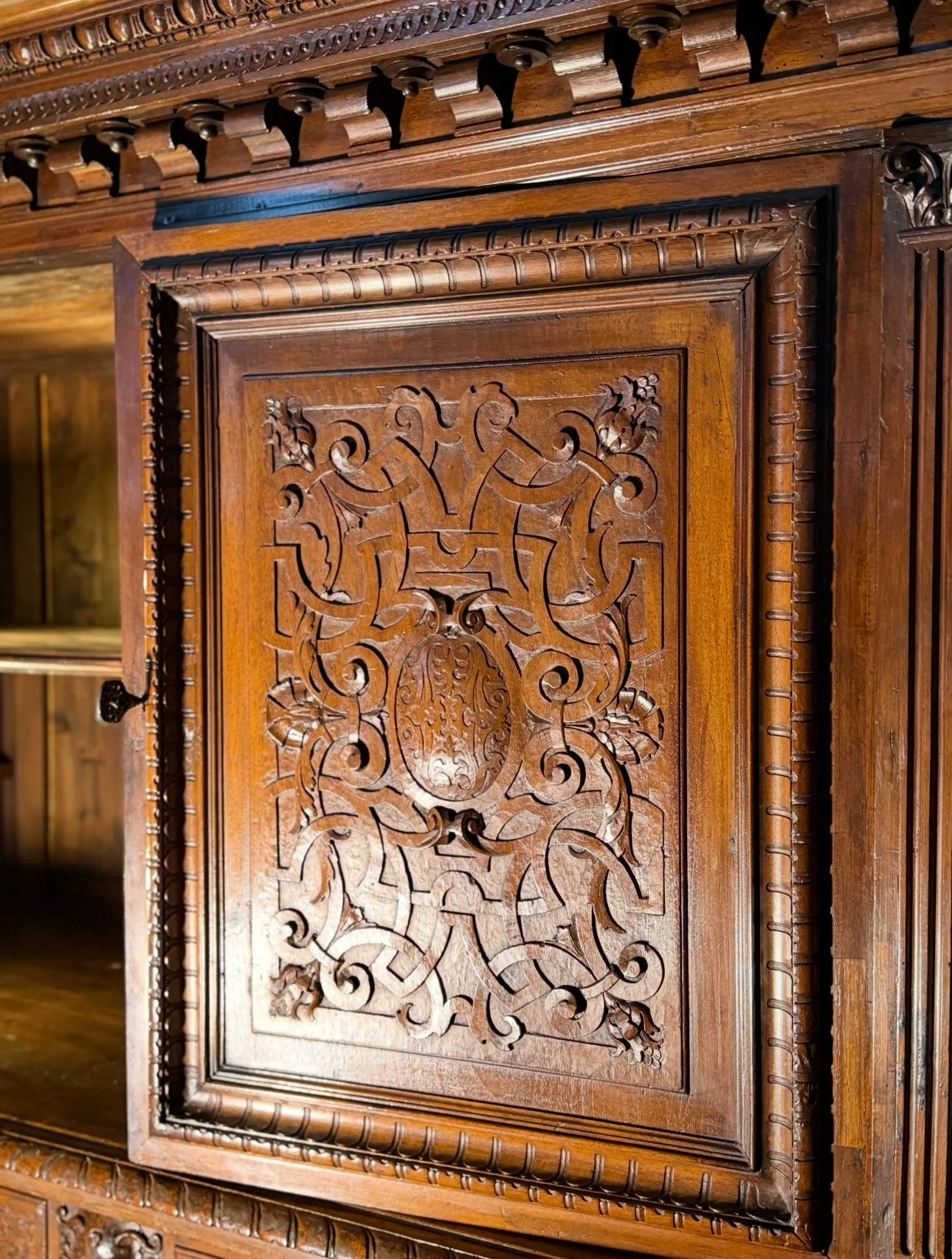
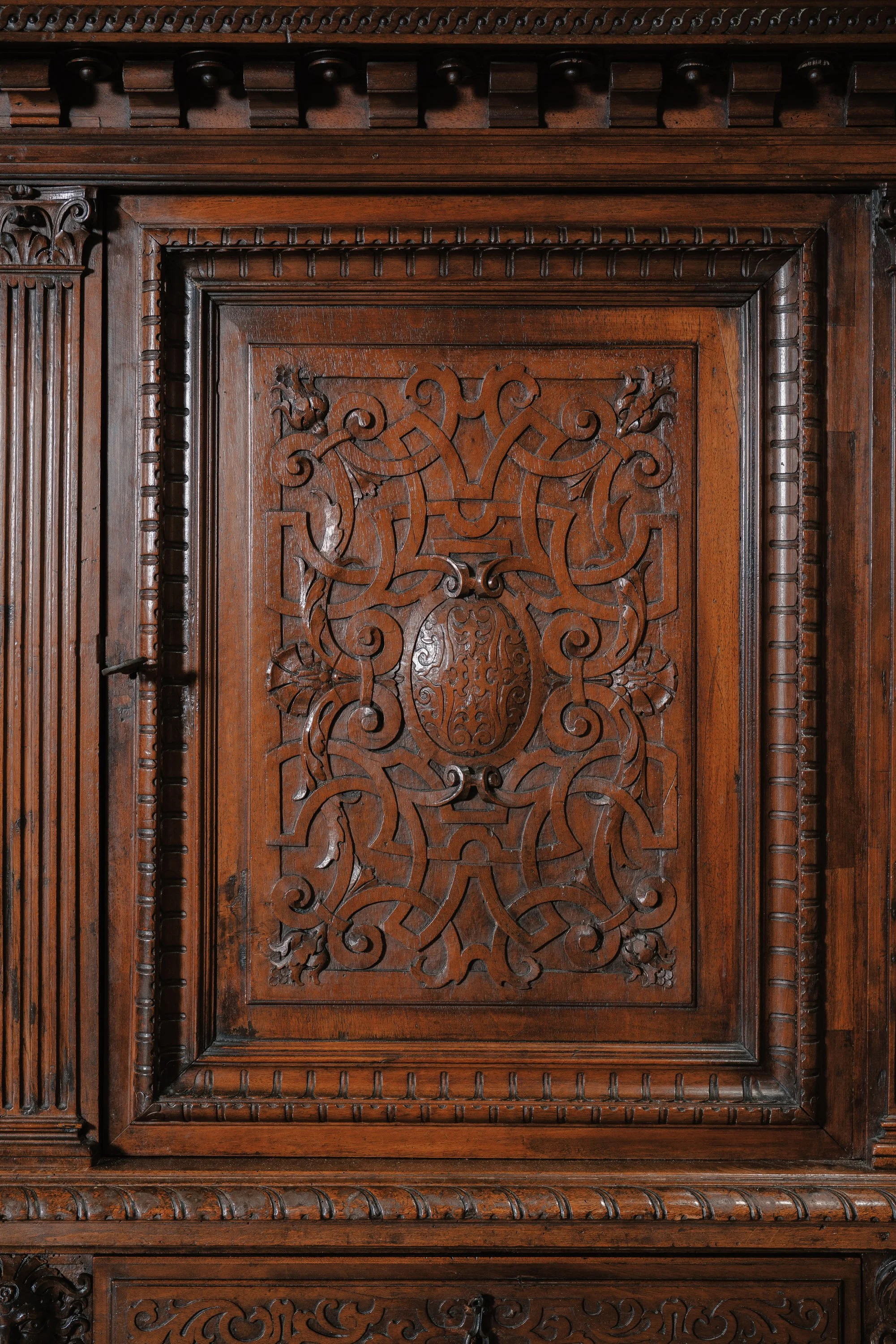
This renaissance revival cabinet from the second half of the 19th century is perhaps so compelling because it is a “re-mounting” of apparently four original renaissance period door panels. The dexterity of this actual period sculpture, the balance of precision and subtle undulations left from hand tooling, shimmer in just the way one hopes for on a genuine article. It was a regular practice for fine furniture workshops to save and recycle elements of earlier pieces, or beautiful panels from works that had all but rotten away. Those scrolling motifs in somewhat high relief in the manner of “cut-out leather,” cuir découpé, are emblematic of the renaissance period, and they help the eye lose track of what is newer and what is older on this rather successful piece.
Height: 7ft 2 inches. Width: 5ft 10.5 inches (at extremities of upper cornice). Depth: 26 inches.
Myers & Monroe, LLC
Quisque iaculis facilisis lacinia. Mauris euismod pellentesque tellus sit amet mollis.